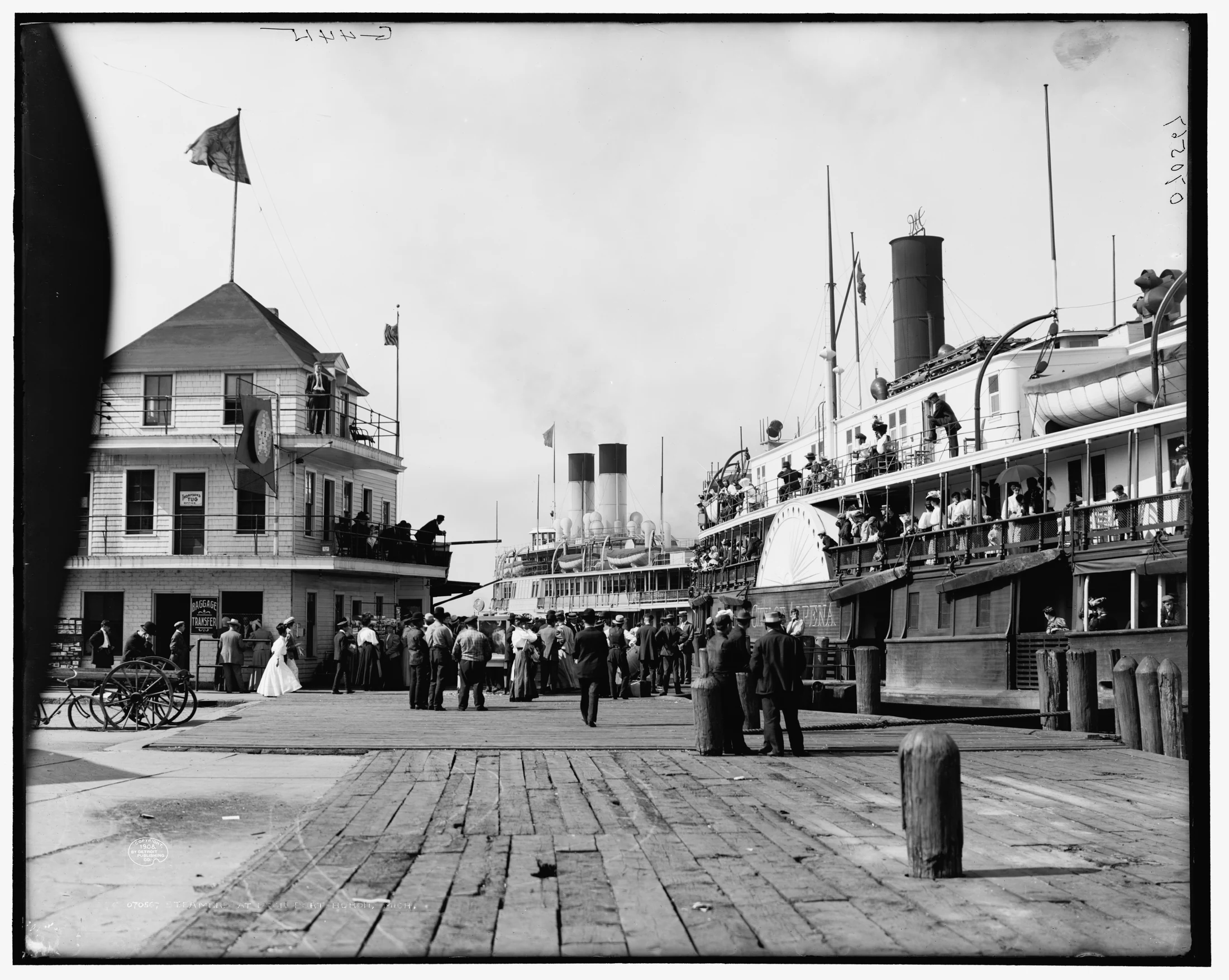
Harbor Street · An imagined museum, a real archive
Between water & work.
Twelve archival photographs. Eight ways of looking. A walk through the working waterfront.
Sample exhibition
A harbor can be read in the space between things: a hull and a quay, a journey and an arrival, a photograph and the facts that survive around it. This walk brings together twelve photographs from the Library of Congress. They show real vessels and waterfronts, from Detroit and Port Huron to Gloucester, Boston and New York. Harbor Street Maritime Museum is an imagined setting for their display. It does not claim these places as one town, or these photographs as its own collection. Start with the water. Then look for the work.
Harbor Street Maritime Museum is fictional. The photographs are real archival records from the Library of Congress; their original places, dates and credits are preserved.
02 / The departure quay
Every crossing begins on land.
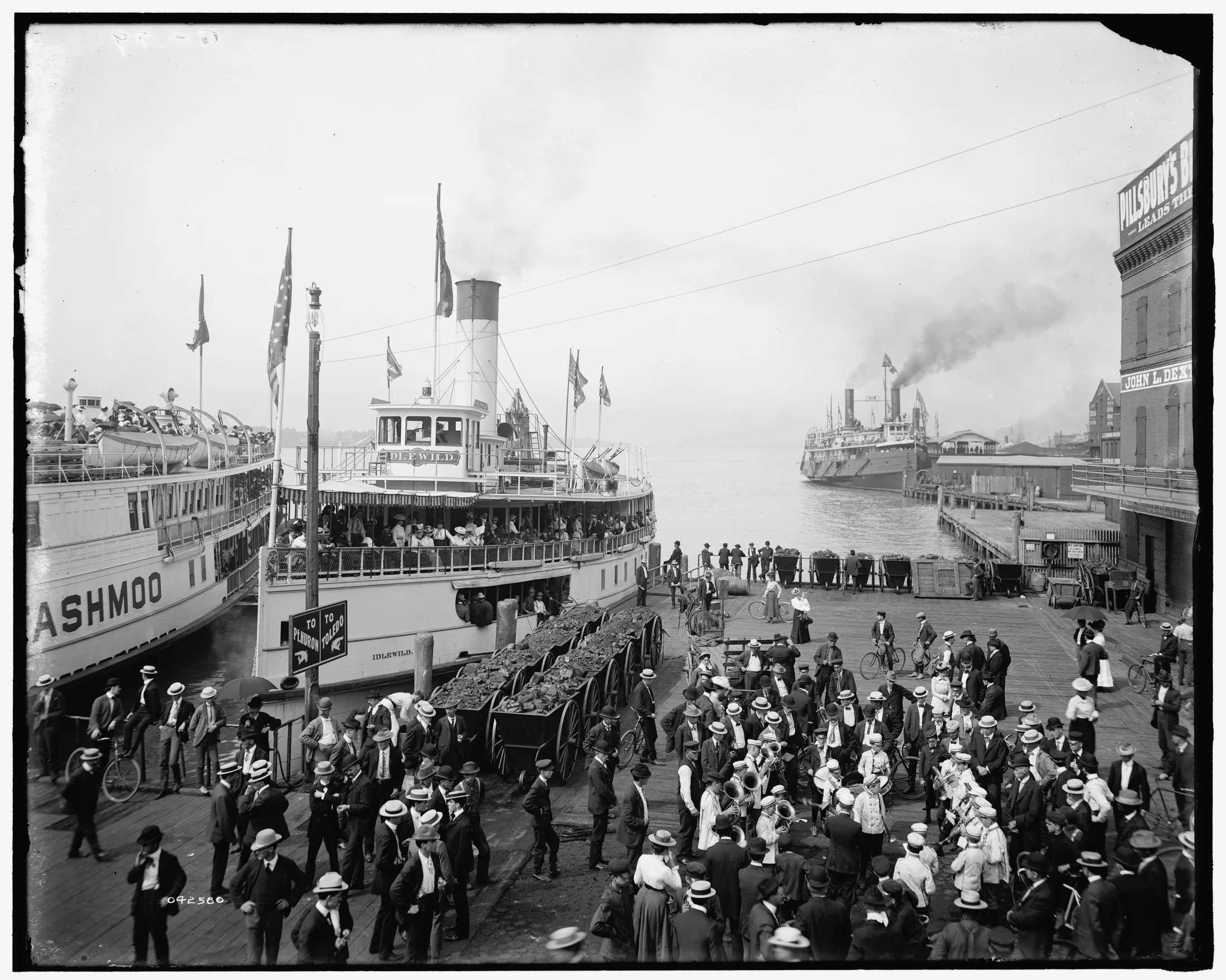
Before a vessel becomes a silhouette on the horizon, it is a building alongside the shore. Look at the layers of decks, the repeated windows, the meeting of timber and water. The catalogue names the excursion steamers Tashmoo and Idlewild and places them at Detroit wharves around 1901. That is what the record tells us. The waiting, the noise and the destinations we might imagine are another kind of response. Here, looking closely means keeping both things in view: the photograph's invitation and the limits of its evidence.
03 / The working wharf
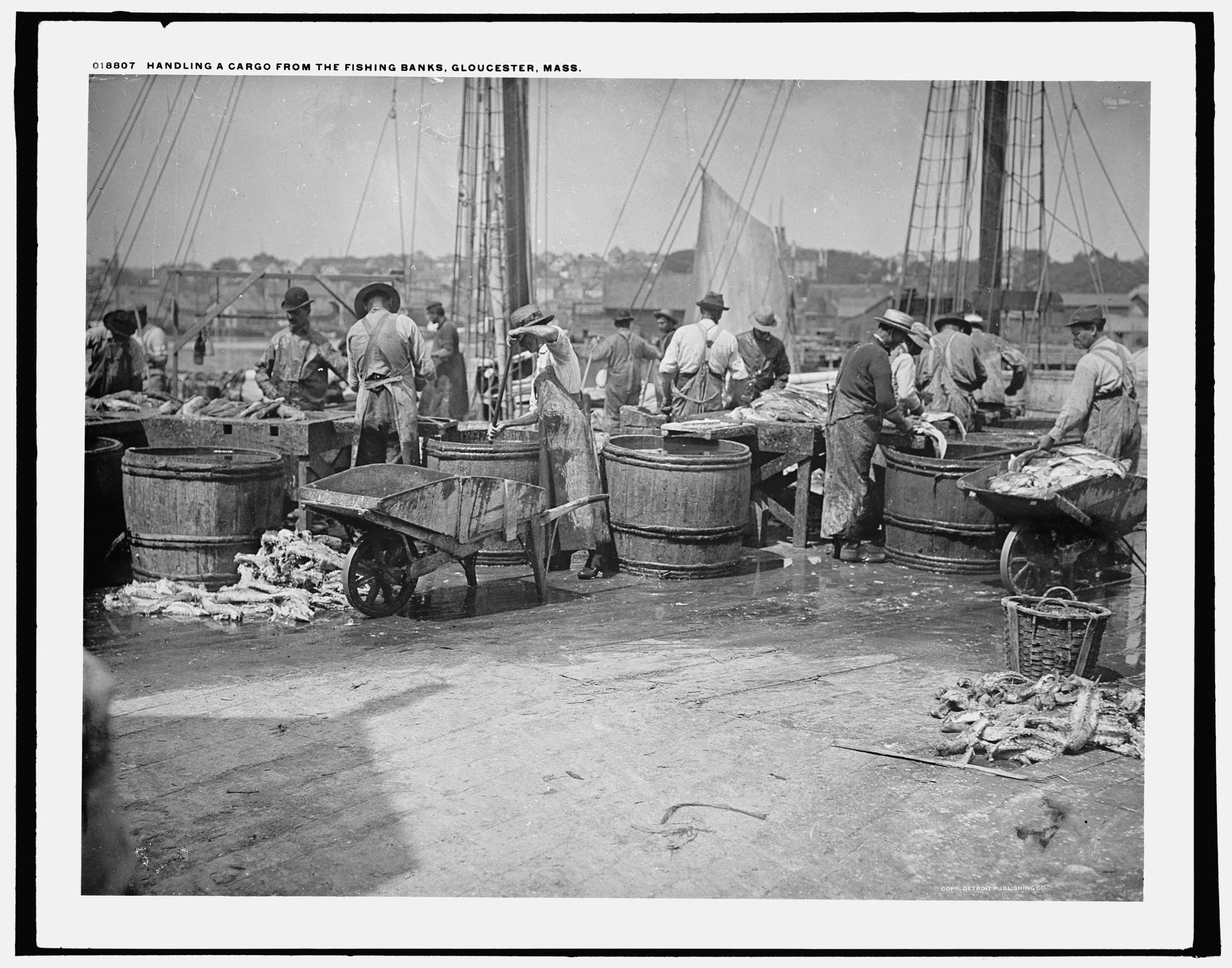
The shore is a workplace.
Ships occupy the skyline; people give the waterfront its scale. In this photograph, the catalogue identifies fish-handling work in Gloucester, Massachusetts. Its date, c[1905], is based on a publisher's catalogue issued in 1906. The people pictured are not named in the record. We can notice their positions, the working surface and the proximity of vessels, but we cannot recover a biography by looking harder. This label leaves that silence visible. A collection can preserve evidence of work while still asking whose names were written down, and whose were not.
04 / The vessel room
A vocabulary of vessels.
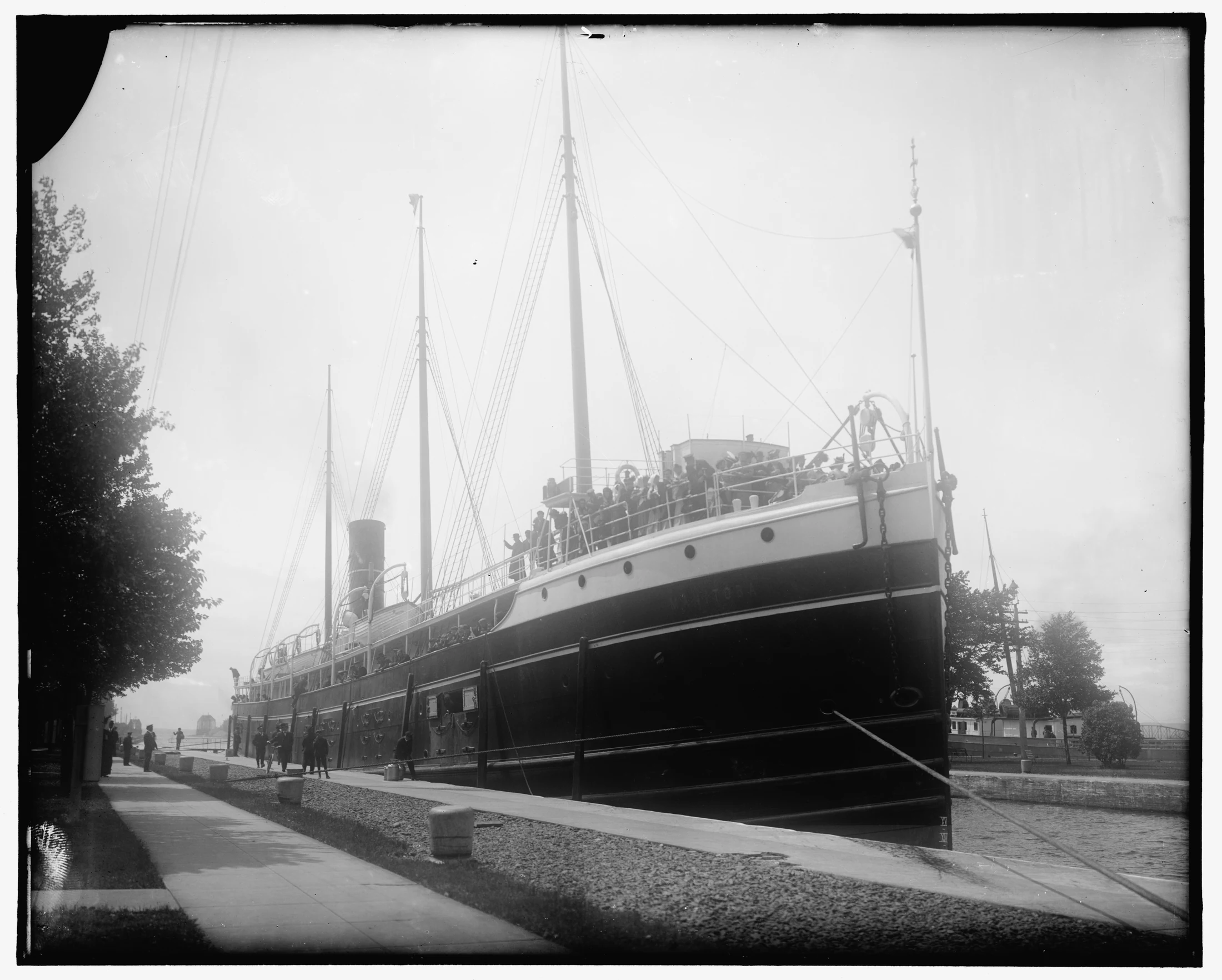
Four records, four ways of naming a ship. The archive describes a Michigan Transportation Company steamer, the transfer steamer Detroit, Eastern States and City of Cleveland. Their catalogue terms include cargo ship, railroad ferry and steamboat. These are useful distinctions, but they are not interchangeable biographies. The date ranges overlap and vary in precision. Read the names first, then look at proportions, funnels and decks. Each image has its own source note, complete frame and file fingerprint. The collection is a conversation between records, not proof that all four vessels shared the same quay.
Michigan Transportation Company steamer
The record dates this cargo-ship photograph between 1890 and 1905. It does not supply a location.
The transfer steamer Detroit
The catalogue identifies a railroad ferry and dates the photograph between 1900 and 1905.
The steamboat Eastern States
The full catalogue date is between 1901 and 1910. A single-year search facet is not a precise date.
City of Cleveland, broadside
Dated [1907]. The catalogue summary identifies Detroit's Orleans Street yard, citing researcher W. Worden (2017).
Four separate archive records. Titles and date ranges remain attached to each photograph.
05 / Two waterfronts
Look together. Keep the difference.
A pair of photographs can make a question easier to see. At Boston's T wharf, the archive identifies unloading fish. In Detroit, another record identifies the steamers Western States and City of Mackinac. Both pictures bring vessels close to the built edge of a city. The work, scale and arrangement differ. These are two places, not successive views of one place. No restoration or historical transformation is being demonstrated. Move between the frames, follow the lines of rigging and railings, and let comparison sharpen attention without erasing the distance between the records.
Unloading fish at Boston's T wharf
Boston, Massachusetts, between 1900 and 1910. A distinct record from the Gloucester work scene.
Two steamboats at Detroit
The catalogue identifies Western States and City of Mackinac. Its date range is 1900–1920.
Two places, two records. These photographs are presented together for looking closely; they are not a before-and-after comparison.
06 / The listening room
Leave a little room for silence.
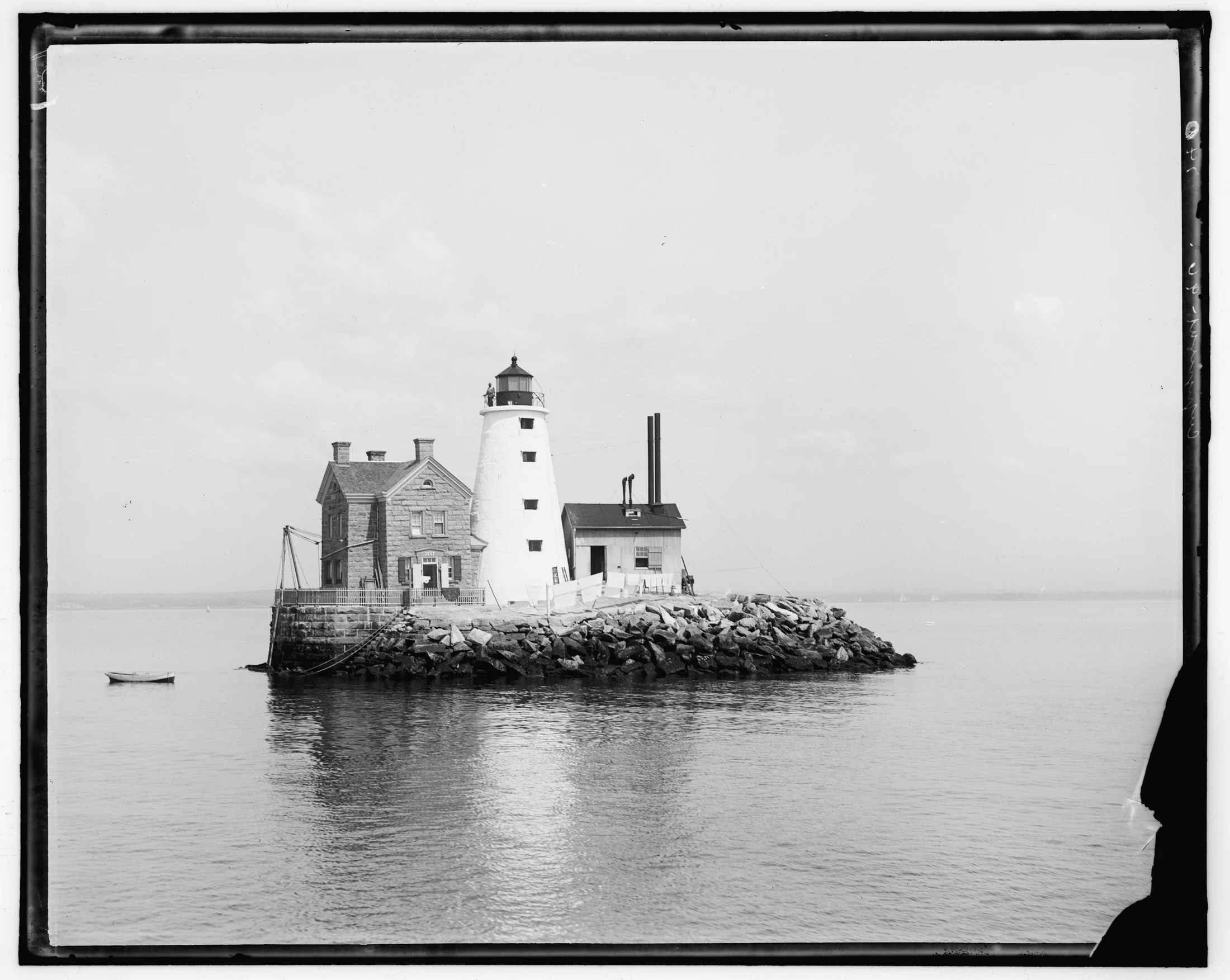
The archive calls this photograph simply Lighthouse on island. It dates the image c1896 and does not name the island. The title was devised by a cataloguer. A lighthouse is an easy object around which to build a story, and that is precisely why the missing location matters. This room offers a proposed reading rather than a recorded witness. There is no audio attached to the sample. Read at your own pace, notice the shoreline around the building, and allow an unidentified place to remain unidentified. Uncertainty belongs in the exhibition as much as a date or a name.
No recorded or synthesized narration is attached to this chapter. The text below is a proposed reading, not an oral-history recording.
Read the transcript
A lighthouse stands on an island. The catalogue gives the date c1896, but no island name. Its title was supplied by a cataloguer. We can describe what is visible without supplying a location that the record does not support. This text is a proposed reading. It is not testimony from a lighthouse keeper or an archival sound recording.
07 / The archive clock
Dates have edges, too.
An archive date is not always a day on a calendar. It can be an approximation, a range, or a conclusion drawn from another publication. The lighthouse record says c1896. The Gloucester work scene says c[1905]. The New York harbor group says [c1908]. In the last case, the record contains ten negatives; we display one image, not a reconstructed panorama. This sequence follows selected records through their catalogue dates. It does not turn them into a complete history of a single harbor. The brackets and the gaps are part of what we have inherited.
A chronology of selected archive records, not a continuous history of one harbor. Brackets and date ranges retain the catalogue's uncertainty.
- c1896.
A lighthouse on an unnamed island
Dated c1896. The title was devised by a cataloguer; the record does not name the island.
- c[1905]
Handling the catch at Gloucester
The date c[1905] is based on the publisher's 1906 catalogue. The people are not named in this record.
- [c1908]
New York harbor from the Battery
Dated [c1908]. This is one image, 4a10172, from a record containing ten related glass negatives.
08 / The colophon
A collection keeps its sources.
These photographs belong to the Detroit Publishing Company Collection at the Library of Congress. The item records state that there are no known restrictions on publication. That wording is retained beside every image; it is not replaced by a made-up licence. Local exhibition files were resized and compressed from archive scans, with no AI restoration or invented historical detail. The original catalogue information, source links and measured file hashes remain available below. Harbor Street Maritime Museum and its harbor map are fictional. This sample demonstrates a reading experience. It does not claim a commissioned artifact was accepted, a translation was independently reviewed, or a payment took place.
This draft has not been reviewed by an independent fluent speaker. Text availability does not establish translation quality.
Make room for your reading
Semantic chapters, a plain navigation list, keyboard-operable controls, descriptive image text, high contrast, adjustable reading width and optional spacious typography are provided. Arabic has right-to-left composition and its own type scale. Motion follows your device preference. These features do not replace testing with disabled readers; no universal accessibility claim is made.
A sample reading experience. No commissioned artifact is represented as accepted or paid.